What Is the Pituitary Gland? The Pea That Runs the Hormones
The pituitary is a pea-sized gland at the base of the brain. It does few of the body's jobs itself; instead it sends instructions to the glands that do, which is why so many peptide articles mention it.
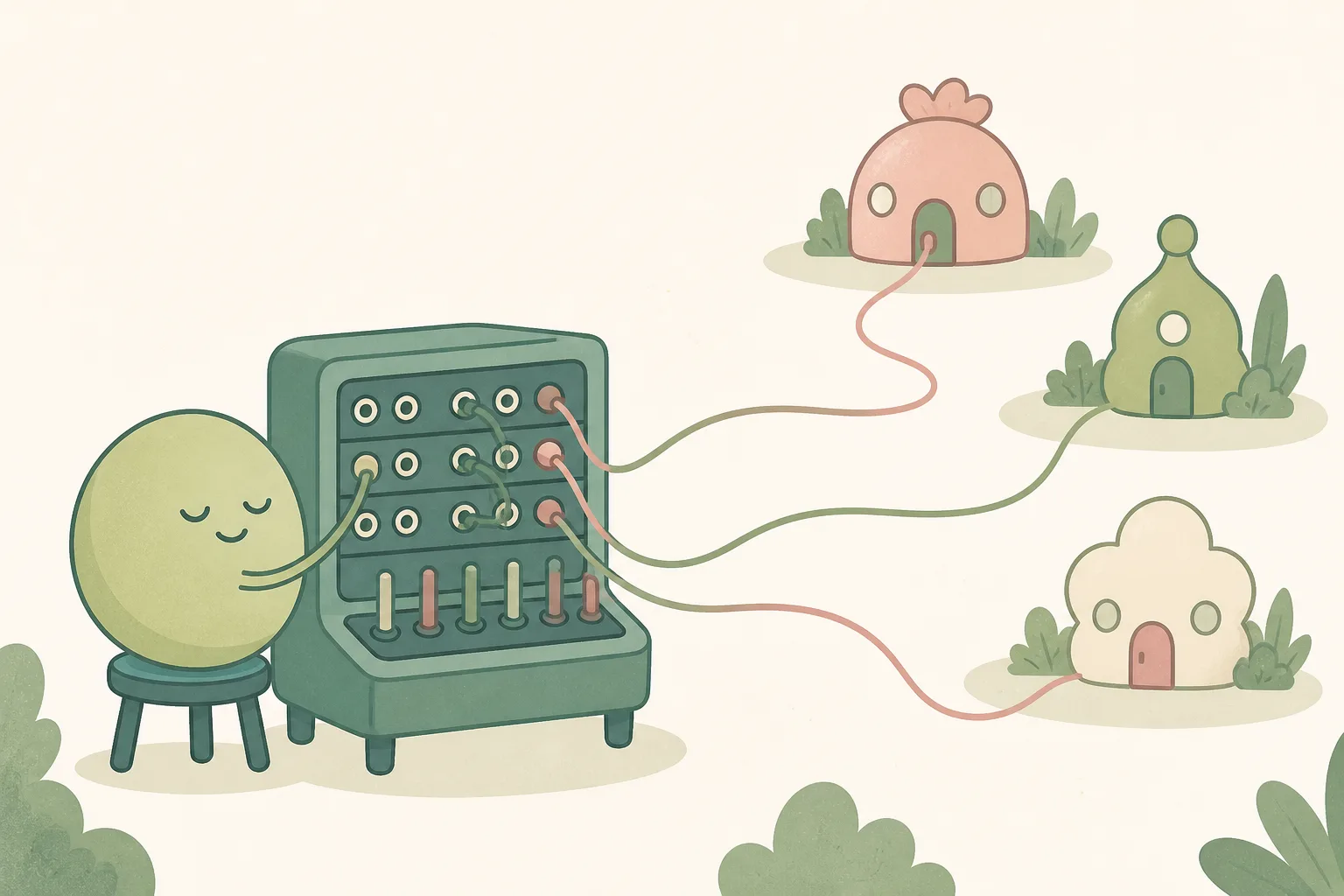
The pituitary gland is a pea-sized gland that sits at the base of the brain and sends out hormones that direct many of the body's other glands. It does not do most of the body's chemical jobs itself. It acts like a switchboard operator: it receives instructions from the brain above it and rings the glands that carry the work out.
Its name keeps turning up in articles about peptides, usually in a phrase such as "acts on the pituitary", and it is rarely explained. This article explains it from the beginning: where it sits, its two halves, the brain region that commands it, the hormones it releases, how it knows when to stop, and why a number of research peptides are described as talking to it. It is an explanation of anatomy and physiology, not advice about using anything.
A pea at the base of the brain
Start with the location. The pituitary sits at the underside of the brain, behind the bridge of the nose, cradled in a small bony hollow in the skull. It is about the size of a pea and weighs less than a gram in an adult 13. For something so small, it has an outsized reputation, and it is often called the master gland.
That nickname is useful but slightly misleading, and it is worth understanding why. A gland is an organ that makes and releases substances, and the pituitary is a gland. The hormones it releases, chemical messages carried in the blood, travel to other glands and tissues and tell them to act 12. In that sense it directs a lot of the body's hormone system. But the pituitary is itself directed from above by the brain, so it is more of a manager of middle management than a final authority.
Back to the switchboard picture. The operator at a switchboard does not make the products, deliver the goods or run the machines. The operator takes a call from head office and puts it through to the right department. The pituitary does the same with hormonal instructions.
Two halves with two different jobs
The pituitary is not one uniform lump. It has two lobes, sometimes called the front and the back, and they are quite different in origin and in how they work 14.
The front part is called the anterior pituitary. It is a true hormone factory: its own cells make several hormones and release them into the blood when the brain above signals them to. The back part is called the posterior pituitary, and it works differently. It does not make hormones itself. It is more like a loading dock. The hormones it releases are made in the brain, in the hypothalamus, then travel down long nerve fibres into the back of the pituitary where they are stored until they are needed 1.
| Part | Where its hormones are made | How it is controlled |
|---|---|---|
| Anterior (front) | In the pituitary's own cells | By releasing and inhibiting signals sent from the hypothalamus through a tiny network of blood vessels |
| Posterior (back) | In the hypothalamus, then stored in the pituitary | By nerve signals from the hypothalamus |
The hypothalamus: the boss above the boss
Directly above the pituitary sits the hypothalamus, a small region of the brain, about the size of an almond, that monitors things such as temperature, thirst, hunger and the body's chemical balance. It is the point where the nervous system, which works through electrical signals, hands over to the hormone system, which works through chemical messages 12.
The hypothalamus controls the front of the pituitary by sending its own small signalling molecules, some that tell the pituitary to release a hormone and some that tell it to hold back. These are called releasing and inhibiting hormones. They travel only a very short distance, through a tiny set of blood vessels that links the two structures, so a very small amount is enough to act on the neighbouring gland 1.
Many of these hypothalamic signals are themselves peptides, short chains of amino acids, which is one reason the pituitary appears so often in a peptide context. In the switchboard picture, the hypothalamus is head office, and its short messages are the instructions the operator receives.
The hormones it sends out and where they go
The front of the pituitary releases a small family of hormones, and most of them are "tropic", which is a word meaning they act by telling another gland what to do 12.
- Growth hormone acts on many tissues and also prompts the liver to release another signalling substance. It is involved in growth in childhood and in the body's metabolism in adulthood.
- Thyroid-stimulating hormone travels to the thyroid gland in the neck and tells it to make its own hormones.
- Adrenocorticotropic hormone travels to the adrenal glands, which sit on top of the kidneys, and tells them to release stress-related hormones.
- Two hormones, often called the gonadotropins, travel to the ovaries or testes and tell them to produce sex hormones and to support the cells that make eggs or sperm.
- Prolactin acts mainly on the breast and is involved in milk production after birth.
The back of the pituitary releases two hormones made in the hypothalamus. One acts on the kidneys to help the body hold on to water. The other, oxytocin, acts on the uterus during childbirth and on the breast during feeding 13.
This is where the switchboard picture earns its keep. Look at the list: most of these hormones do not themselves do the final job. They ring another gland, and that gland does the work. The pituitary is the relay.
How the pituitary knows when to stop
A gland that kept shouting instructions would cause chaos, so the system has a brake, and the brake is feedback. A feedback loop is a signal that, once it has done its job, turns down its own source, like a thermostat switching off a furnace when the room is warm. Another article in this series covers feedback loops in full.
In practice, the hormones that the target glands release travel back in the blood and are detected at the pituitary and the hypothalamus. When those levels are high, the upper stages quieten their own signals. When the levels are low, they raise them. The thyroid is the standard example: thyroid hormone in the blood tells the pituitary to release less of the hormone that drives the thyroid 12.
The result is a hierarchy with a built-in thermostat at each step. Head office issues a short instruction, the operator relays a message, a gland does its work, and the products of that work report back up the chain to adjust the next round.
Why so many peptides "talk to" the pituitary
Now we can answer the question that brought most readers here. The pituitary shows up in so many peptide articles because it is the point at which a short peptide message can have a wide effect. A brief signal reaching the pituitary can alter what a whole chain of downstream glands does.
Three families are often described this way in the research literature, and they are named here only as examples of where the pituitary appears. One group of compounds is modelled on the hypothalamic signal that prompts the release of growth hormone, and is described as acting on the same receptors. A second group, the growth hormone-releasing peptides, is described as acting on a different receptor that also prompts the pituitary to release growth hormone. A third compound is a copy of the hypothalamic signal that prompts the release of the two gonadotropin hormones. In each case, the stated target is the pituitary, or the signal that normally tells the pituitary what to do.
Those descriptions are about mechanism, meaning where a compound is said to act. They are not the same as evidence of any outcome in people. The tier of evidence behind any specific compound varies widely, from experiments in cells, through animal studies, to a small number of human studies, and the tiers should be kept separate. The mechanism is the first rung, not the last.
What happens when it over- or under-works, briefly
Because the pituitary affects so many systems, a fault in it has wide effects. This is covered here only in outline, since diagnosing or managing such a condition is a matter for a physician and not for a reference article.
A pituitary that makes too much of a hormone, usually because of a small non-cancerous growth called an adenoma, can push a downstream system too hard. A pituitary that makes too little can leave the downstream glands under-instructed. Because one pituitary hormone can affect several tissues, the signs can be varied and can build up slowly 34. Pituitary disorders are real, are recognised in medicine, and are investigated through blood tests and imaging by specialists. Anyone with concerns about their own health should speak to a doctor.
In one sentence
The pituitary is a pea-sized switchboard at the base of the brain: it takes short instructions from the hypothalamus above it and relays them to the glands that do the work, which is why articles about hormone-related peptides keep naming it.