What Is a Batch Number?
One making-session, given a name. It is the dullest thing printed on a label, and it is the only reason a recall can ever be aimed at some products rather than all of them.
Everyone has seen a recall notice. A carmaker asks owners to bring in vehicles built at one plant between two dates. A supermarket pulls one particular soup from the shelves and leaves every other soup exactly where it is. Nobody finds this strange, and almost nobody stops to ask how the company knew which ones to name.
The answer is a batch number. It is the least interesting thing printed on any label, and it is the reason a recall can be a scalpel instead of a bulldozer.
This article explains what one is, why manufacturers bother, how a batch number turns a piece of paper into a document about the object in your hand, and what it means when a certificate arrives with no batch number on it at all.
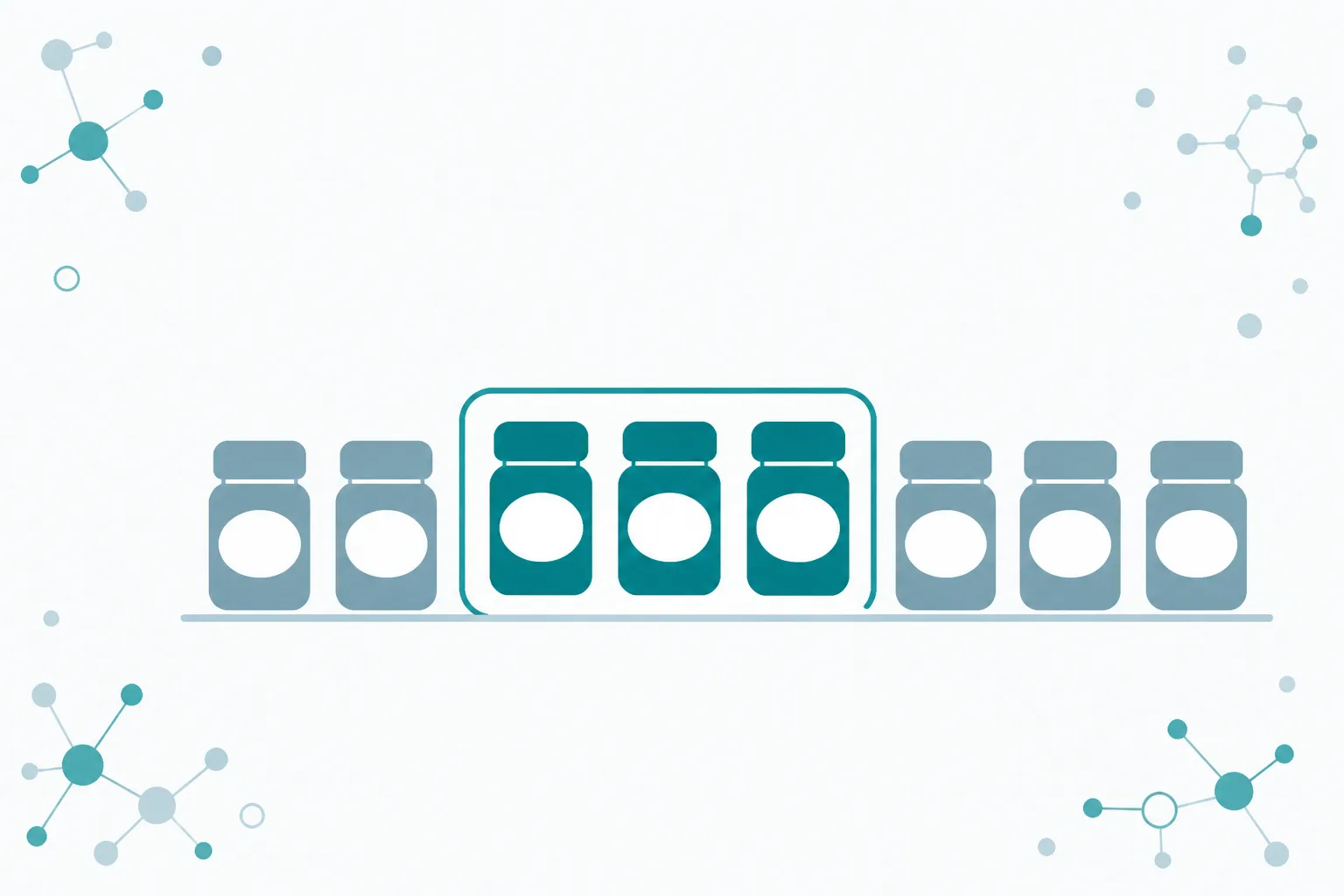
A batch is one making-session
Things are not usually made one at a time. They are made in runs. A dairy fills a tank and bottles it. A print shop loads a roll of paper and runs off a job. A manufacturer of laboratory chemicals sets up a process and makes a quantity of material in one continuous go.
That single run is a batch. The formal definitions used in manufacturing guidance say much the same thing in more careful language: a batch is a specific quantity produced in a process or series of processes such that it is expected to be uniform within defined limits 1. Strip out the caution and it means one making-session, with everything in it treated as the same material.
The number attached to that session is the batch number. Some are meaningful — plenty of manufacturers build a date into the code, so that a person who knows the scheme can read a year and a month out of it. Plenty of others are simply the next number in a sequence. There is no requirement for a batch number to mean anything, and you should not try to decode one.
You will also see the phrase lot number, and it is worth clearing this up early because it causes needless confusion. Lot and batch are the same idea. The word lot is more common in North America, batch more common in Europe, and documents frequently use both on the same page. If a certificate says lot and a container says batch, that is not a discrepancy.
Why manufacturers track them
Three reasons, and they are worth separating because people usually only know about the third one.
The first is cause-finding. If something turns out to be wrong, the useful question is what was different about the material that went wrong. A batch number is the thread that leads back to the answer: which raw materials went in, which equipment was used, who ran it, what the readings were at the time. Manufacturing guidance requires those records to be kept and kept together, exactly so the thread does not break 1.
The second is that testing only makes sense against a defined quantity. Nobody tests every container. A sample is taken, measured, and the results are treated as describing everything made in that run. That inference is only reasonable if there is a boundary around what the run was. The batch number draws that boundary.
There is a quieter consequence of that second reason, worth spelling out because it explains something people notice and never ask about. Dates are assigned per batch too. When a label carries an expiry or a retest date, that date was worked out from when this particular run was made and tested — not from when it was bought, and not from the product line in general. Two containers of the same product bought on the same day can carry different dates, simply because they came from different sessions. The batch number is what makes that sensible rather than arbitrary.
The third reason is the one everyone has met: being able to pull back a defined portion of what was sold. Which brings us to recalls.
What a recall is, and why batch numbers make it possible
A recall is a request to stop using and return a specific quantity of a product, because something about it turned out to be wrong. It can be started by the company itself or requested by a regulator. Formal recall systems even grade them by seriousness, from problems unlikely to cause harm up to those where the consequences could be severe 2.
Now think about what a recall actually requires. Somebody has to say, precisely, which items are affected. Not roughly. Precisely enough that a person holding one container can look at it and know whether they are holding an affected one.
Without batch numbers there are exactly two options, and both are terrible. Recall everything the company has ever sold under that product name — enormously wasteful, and so expensive that companies delay doing it. Or recall nothing, and hope. Neither is a system. Batch numbers turn an impossible choice into a targeted, ordinary piece of administration.
The car recall is the clearest version of the same logic. A notice names vehicles built at a particular plant between particular dates, because that is where the faulty part went in. Owners outside that window are unaffected and know it immediately. The vehicle identification number takes it one step further again: it names a single car rather than a production window.
That finer level exists in medicines too. European rules introduced safety features on prescription medicine packs, including a unique identifier that names an individual pack rather than the batch it came from, so a specific pack can be checked and retired at the point it is handed over 3. It is a batch number's idea, taken down to the level of one box.
| Identifier | What it names | What it lets you do |
|---|---|---|
| Product or catalogue code | A product line | Reorder the same thing |
| Batch or lot number | One making-session | Tie a container to a test report, and to a recall |
| Serial or unique identifier | One individual unit | Check or retire a single pack on its own |
| Expiry or retest date | A moment in time | Know when the material stops being covered by its testing |
How a batch number connects a container to a piece of paper
This is where the idea earns its keep for an ordinary reader, and it is simpler than it sounds. A certificate of analysis is a test report about a batch. The container is a physical object. The batch number is the only thing that joins the two.
So the check is one line long. Look at the number on the document. Look at the number on the container. If they are the same string of characters, the document describes the material you are holding. If they are different, it describes different material. If one of them is missing, the connection was never made.
It helps to know why this is not a technicality. Two batches of the same product genuinely can differ. They were made at different times, possibly from different starting material, possibly by a different operator on differently maintained equipment. That is not a hypothetical worry: when researchers examined peptide products from an unregulated market, the purity of what they found varied enormously from one product to another 4. If batches did not differ, nobody would need to number them.
Think of a school photograph with the year written on the back. The photograph is genuine either way. But if the year is missing, you have a picture of some children at some point, and every specific claim you might want to make about it has quietly become unsupportable.
What if there is no batch number?
Take it seriously, because it changes what the surrounding paperwork can establish. There are a few versions of this, and they are not equally bad.
- No batch number on the certificate. The document now describes an unidentified quantity of material. Whatever its figures say, they cannot be attached to anything in front of you.
- A batch number on the certificate but none on the container. Half a link. The document points somewhere specific; the container cannot confirm it is that somewhere.
- Numbers on both that do not match. The document is about a different run. This is not a paperwork slip to shrug at — it is the one check the whole document exists to survive.
- A single certificate offered for every purchase, indefinitely. Batches are finite. A document reused across many runs has stopped being a test report and become a brochure.
None of this requires suspicion of anybody. Keeping batch records and printing identifiers on containers is real work and a real cost, and for material sold for laboratory research rather than as a medicine, it is largely voluntary. Some sellers do it thoroughly. Some do not do it at all. The point is only that you can see which, without any technical knowledge, by reading two numbers and comparing them.
That is the whole of what a batch number is. A name for one making-session, chosen so that a quantity of material can be found again later — in a record, in a test report, or in a notice asking for it back. Dull, plain, and holding up more than it looks like it does.
References
- Q7 Good Manufacturing Practice Guide for Active Pharmaceutical Ingredients
- 21 CFR Part 7 Subpart C — Recalls (Including Product Corrections): Guidance on Policy, Procedures, and Industry Responsibilities
- Directive 2011/62/EU amending Directive 2001/83/EC as regards the prevention of the entry into the legal supply chain of falsified medicinal products
- Impurity profiling of the most frequently encountered falsified polypeptide drugs on the Belgian market