making sense round three
What Is a Phase 3 Trial?
Every medicine climbs the same ladder of human testing. Phase 3 is the rung where a treatment finally has to prove itself in large numbers — and where most of the surprises, good and bad, turn up.
A Phase 3 trial is the large, late stage of testing a new treatment in people. It usually involves hundreds or thousands of volunteers, compares the treatment against a dummy or against the treatment people already use, and runs for a year or more. It comes after two smaller rounds of testing, and it is normally the evidence a medicines regulator weighs when deciding whether the treatment can be sold at all.
A companion piece on this site explains how any single trial is built: the control group, the dummy treatment, the coin flip that decides who goes where. This one is about the ladder those trials sit on. Why testing comes in numbered steps, what each step is for, and why the third step is the one worth watching.
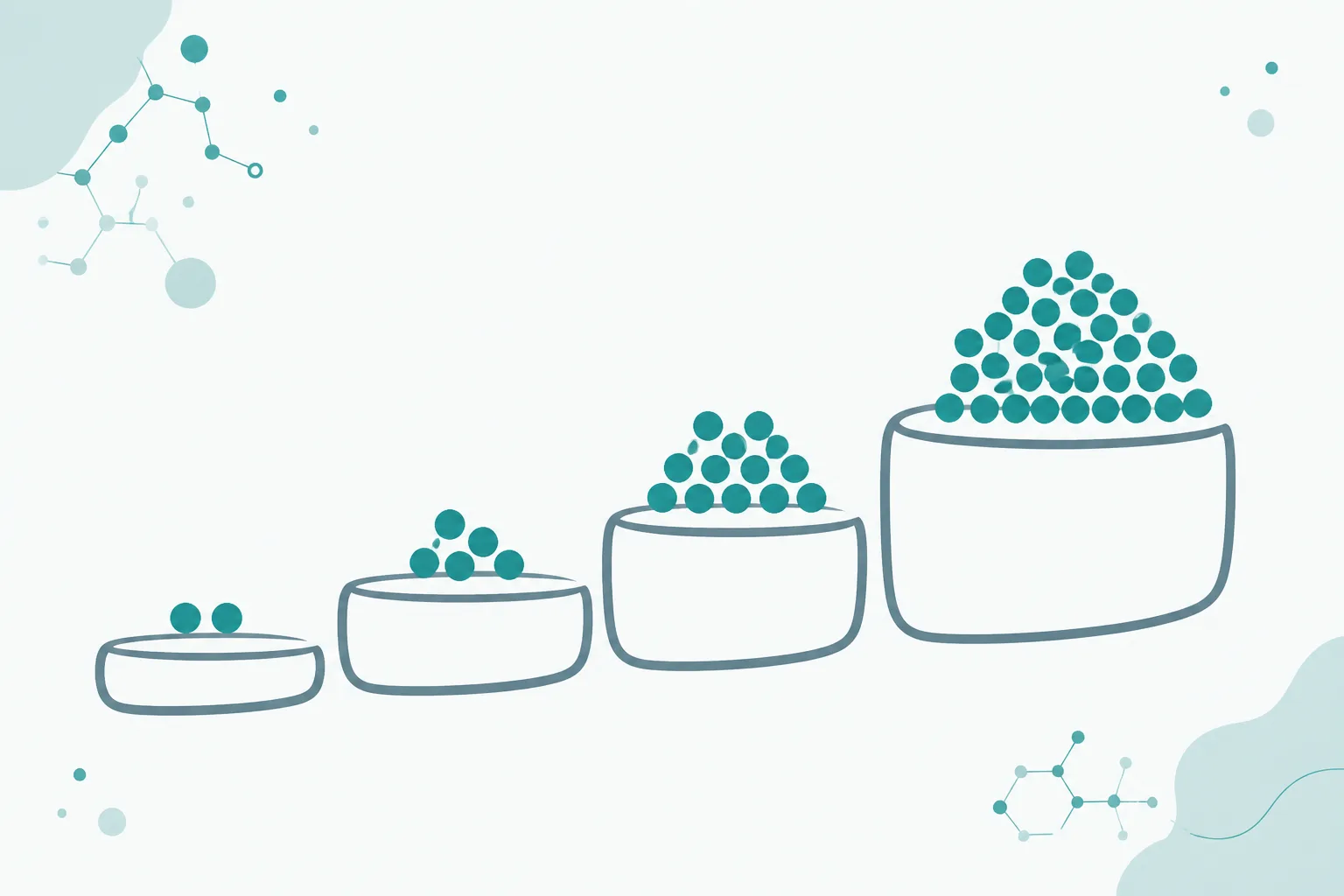
Why does testing come in steps at all?
Imagine a restaurant trying out a new dish. The chef does not put it on the menu at every branch on the first evening. First she tastes it herself, to make sure nothing about it is actually unpleasant. Then she serves it to one table of regulars and watches their faces. Only if that goes well does it go on the menu everywhere, for a whole season, next to the old favourite so the two can be compared.
Testing a treatment in people follows the same logic, for a far more serious reason. Each step exposes more people, for longer. So each step has to earn the next one. If something is going to go badly wrong, you want to find out with twenty people rather than twenty thousand. And if a treatment does nothing, you want to find that out before thousands of volunteers have given a year of their lives to it.
Before any of this starts, a compound has usually been studied in cells and in animals. That stage is called preclinical, meaning before the clinic. It answers whether there is any reason to try the compound in people at all, and it has an article of its own here. The phases described below all begin at the moment a human being takes part.
The numbered stages are defined by regulators. In the United States, the Food and Drug Administration describes four of them, with a typical size, length and purpose for each 1. Europe and most other regions use the same numbering, so a Phase 3 trial means roughly the same thing wherever you read about it.
Phase 1: can people tolerate it?
A Phase 1 trial is the first time a compound is given to people. It is small: the FDA's description is 20 to 100 participants, who may be healthy volunteers or people with the condition, over several months 1. The main question is not whether the treatment works. It is what the body does with the compound and what the compound does to the body — how it is absorbed, how long it stays, what goes wrong, and how much of it people can take before something does.
Researchers usually start with a very small amount in a handful of people, then step up carefully in the next small group, watching everyone closely. It is slow on purpose. Roughly half of programmes clear this first step. An industry analysis of more than twelve thousand phase transitions between 2011 and 2020 found that 52 per cent moved on from Phase 1 to Phase 2 2.
Phase 2: does it look like it does anything?
A Phase 2 trial is the first real look at whether the treatment has the effect it was designed for. It enrols people who have the condition, up to several hundred of them, and lasts from several months to two years 1. Many Phase 2 trials include a control group. They also try out different amounts of the compound, to find the range where the effect is clearest and the problems are fewest.
This is the hardest step on the ladder. In the same analysis, only 28.9 per cent of programmes moved from Phase 2 to Phase 3 2. It is where most promising ideas quietly stop, very often because an effect that looked clear in animals turns out to be small, or missing, in people.
You will sometimes see letters added to the numbers: Phase 1b, Phase 2a, Phase 2b. They mark smaller steps inside a phase. A 2a trial is usually an early, exploratory look; a 2b trial is a larger one that helps a company decide whether Phase 3 is worth the money. A trial labelled Phase 2/3 is designed to roll from one stage into the next without stopping in between.
Phase 3: does it really work, and at what cost?
Phase 3 is the big one. The FDA's description is 300 to 3,000 people who have the condition, followed for one to four years, with the purpose of showing whether the treatment works and watching for harmful reactions 1. Some Phase 3 programmes are far bigger than that, especially when the question is whether a treatment prevents rare events such as heart attacks, because rare events need enormous numbers of people before enough of them happen to count.
What makes a Phase 3 trial different is not only its size. It is the seriousness of its design. The comparison is usually against a placebo — a dummy treatment — or against the best treatment already available. Participants are assigned by chance and, where possible, nobody knows who received what. The main thing being measured, called the primary endpoint, is written down before the trial starts. And the trial usually runs at many hospitals in several countries at once, so the result cannot be a quirk of one clinic.
Regulators often want more than one such trial, or one very large one, before they are satisfied. A single positive result can be luck. Two independent ones rarely are.
Now the sobering part. Reaching Phase 3 is no guarantee of anything. Across 2011 to 2020, 57.8 per cent of programmes moved from Phase 3 to an application for approval 2. A separate study followed several hundred treatments that entered late-stage trials and found that 54 per cent failed. Most of those failures happened because the treatment did not work well enough; safety concerns lay behind 17 per cent of them and commercial decisions behind 22 per cent. Only around four in ten of the failed treatments ever had their trial results published 3, which is a problem of its own.
| Phase | The question it asks | Typical size | Typical length |
|---|---|---|---|
| Phase 1 | Can people tolerate it, and what does the body do with it? | 20 to 100 people | Several months |
| Phase 2 | Does it seem to have the intended effect, and in what range? | Up to several hundred people | Several months to two years |
| Phase 3 | Does it really work, compared with something else, and what harms appear? | 300 to 3,000 people, sometimes far more | One to four years |
| Phase 4 | What happens in ordinary use, across many more people? | Several thousand and upwards | Continues after approval |
Why is Phase 3 the one that counts?
There are two reasons, and both of them are about numbers.
The first is chance. A small trial can produce a striking result by luck, the way ten coin flips can easily land seven heads. A trial of a few thousand people, assigned by chance and compared fairly, is far harder to fool. When a well-run Phase 3 trial reports an effect, it is usually real. When it reports no effect, that usually is too.
The second is harm. Suppose a treatment causes a serious problem in one person out of every thousand. In a Phase 1 trial of forty people, almost certainly nobody has it. In a Phase 2 trial of three hundred, perhaps nobody does, or one person does and it looks like bad luck. In a Phase 3 trial of several thousand, a handful of cases appear, and because there is a comparison group, researchers can see whether they are happening more often than they would have anyway.
The clearest example is a cholesterol drug called torcetrapib. It did exactly what it was designed to do to a blood measurement, raising the kind of cholesterol usually called the good kind. On the strength of that, it went into a Phase 3 trial of 15,067 people at high risk of heart disease. The trial was stopped early. By then 93 people given torcetrapib had died, compared with 59 in the comparison group 4. The earlier phases had simply not been big enough, or long enough, to show it.
That is the whole case for Phase 3 in one story. A treatment can move a number in the right direction and still leave people worse off. Only a large, fair comparison, watching the outcomes that matter to people rather than the numbers that are easy to measure, can tell those two apart.
What does a Phase 3 result not tell you?
Even a clean, positive Phase 3 trial has edges. It helps to know where they are.
- Who was in it. Trials have entry rules, and people who are very old, pregnant, seriously ill with something else, or taking many other medicines are often left out. The result describes the people who were studied.
- How long it ran. One to four years is long for a trial and short for a lifetime. Harms that take a decade to appear sit outside its view.
- What it was compared with. Beating a placebo and beating the best existing treatment are different achievements. Check which one the trial managed.
- Whether the headline is the endpoint. Trials measure many things. The one decided in advance is the result; the others are leads for someone else to test.
- Whether you are reading the whole thing. Companies often announce topline results — a short summary of the headline numbers — weeks or months before the full paper. The details, including the harms, arrive later.
None of this is a reason to distrust Phase 3 evidence. It is still the best evidence there is about whether a treatment works. It is simply a reminder that best is not the same as complete.
What happens after Phase 3?
If the results are good, the company gathers everything — every phase, every trial, the details of how the product is made — into an application to a regulator. In the United States it is called a new drug application, or a biologics licence application for treatments made using living cells. In the European Union it is a marketing authorisation application. The regulator's own scientists then go through the data, often re-running the analyses themselves. Most applications that get this far succeed: in the analysis above, 90.6 per cent were eventually approved 2.
Approval comes with a label. That is the official document setting out exactly what the treatment is approved for, in whom, and with what warnings. The label matters long after approval, because it is the line against which terms such as off-label are measured.
Then comes Phase 4, which covers the studies and monitoring that continue after approval, in several thousand people and far more besides 1. Doctors and patients report problems to national monitoring schemes. Some harms are rare enough, or slow enough, that only years of ordinary use reveal them. Approval is not the end of learning about a medicine. It is the point where the learning moves from a few thousand people to millions.
Where do research peptides sit on this ladder?
This is worth saying plainly. Most compounds sold as research peptides have never entered Phase 1. Some had a small early trial years ago and went no further. A few were developed as medicines, reached later testing, stalled, and now live on as laboratory reagents. Very few have anything like a completed Phase 3 programme behind them.
That is not proof that they do nothing. It is a description of how much is known, and the ladder makes it easy to see. Every rung a compound has not climbed is a question nobody has answered yet: whether people tolerate it, whether it does anything, and whether what it does outweighs what it costs.
So when you meet a claim, ask where its evidence sits on the ladder. Cells and animals? A single Phase 1 trial in thirty people? A Phase 3 programme in thousands, compared fairly, with the results published in full? Those are three completely different amounts of knowledge, and the phase number is the quickest way to tell them apart.